Instagram

Showing posts with label Rube Goldberg. Show all posts

Tuesday, June 16, 2015

3rd Grade Machine Brains

Think about the game of Mousetrap. Do you actually know how to play it? NOBODY DOES. It's a fact that not a single child in the history of kids has ever played Mousetrap by the rules. You build the whole trap and play with it until you get it just right. When you get bored, you get a snack and move on to another activity. 

This lesson takes the essence of Mousetrap and turns it into a sweet art project. The entire project is based on the cartoon drawings of Rube Goldberg. If you're not familiar with him, he was a cartoonist who is most famous for his sequential "machines" that were created to intentionally make a simple action incredibly complex. 
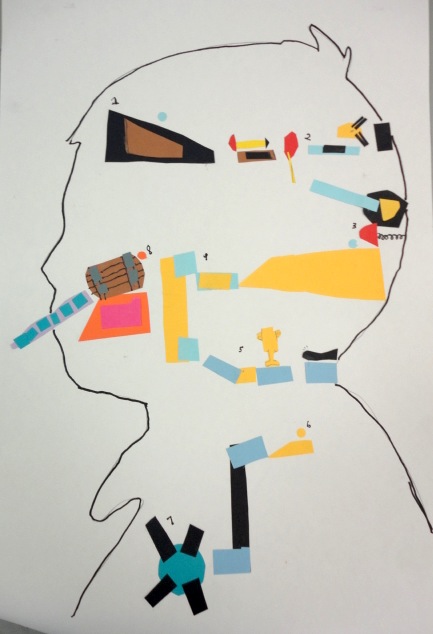
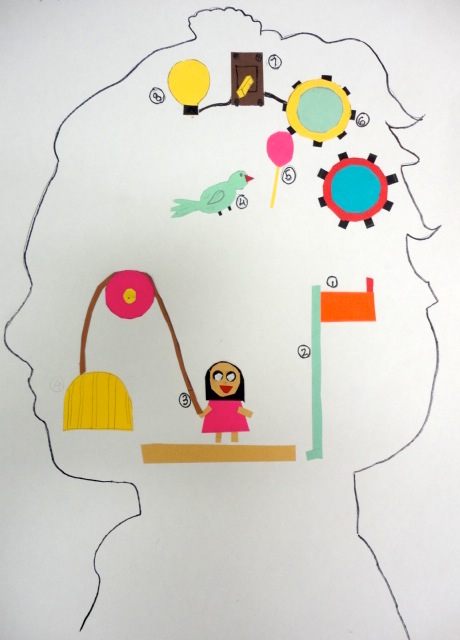
My students are tasked with coming up with Rube Goldberg style machine that controls something that happens in their head. Think of things like seeing, hearing, burping, etc. In addition to the Rube Goldberg inspiration, students also study the six simple machines and incorporate at least four of them into their work. 

The machines that students create are incredibly inventive. I laugh out loud at some of the hilarious sequential steps that they create. The final work is about 95% construction paper- a great way to use up old scraps. 


This is the artist statement that goes along with the artwork above it. 


Friday, July 25, 2014

3rd Grade Machine Brains

Do you know who Rube Goldberg is? If you do, you're cool in my book. If you don't, you will quite soon. This project was originally written by a colleague of mine, but I took it, added to it, and adapted it to my own curricular needs. It was originally written to fit in with the science curriculum (learning about simple machines) in third grade. That curriculum has since changed, but this project keeps on rockin' because it's too cool not to do. 

Rube Goldberg is now the main inspiration for this lesson. I still hit the simple machines pretty hard, but my students think Goldberg's cartoons are hilarious. His fantastically complicated machines are still a source of inspiration for competitions, Mythbusters, and YouTubers. They are all about cause and effect and make sneaky use of science and physics.
A classic example of a Rube Goldberg comic.
 Another source of inspiration for this project is a music video by the band OKGO that was created as a massive Rube Goldberg machine. The band is known for making incredibly creative music videos, including this super rad one that was released recently.


Finally, it comes down to making cool art. Each student spends a ton of time brainstorming and sketching for this project. I challenge them to design a machine that does something that happens in their heads. (Blinking, thinking, chewing, making boogers, etc.) They are required to have at least eight steps and at least four simple machines in their work. I use a projector (just shooting a white screen) to trace the students' silhouettes, then they use construction paper to make the rest of the project. I want at least 95% of the project to be made from the construction paper. I think the project turns out really cool and it really makes students think. I swear I saw some smoke coming out of a few kids' heads this year.  

Thursday, April 4, 2013

3rd Grade Machine Brains

 This is one of my favorite projects of the entire year for any grade level. It consists of massive integration of the science curriculum into the art room. I've always really enjoyed science, so maybe that's part of the reason why I enjoy this project so much. The point of it is to design a machine that has at least eight steps that does something that naturally occurs in a person's head. 

We always start this project by checking out a few of Rube Goldberg's hilarious machine cartoons. My students always get a big kick out of his work and it gets them thinking about the possibilities for their own projects. 

 Next, we talk about the six different simple machines and take a look at examples of each. Finally, we look at a few videos of Rube Goldberg style machines that people have actually built and put on YouTube. My favorite is a music video by OK GO. My students go nuts over this video.

 Finally, it's time to actually do some artwork. It takes a couple of weeks to brainstorm and get sketches finalized. It sounds like a lot of time, but it really does take that amount of time to do a couple drafts in order to ensure that the machines make sense. Final art is done on a 12"x18" white paper. I trace each student's silhouette during the sketching phase so it is ready to go when they begin their final. All of the machine parts are made with scrap construction paper. Huzzah for science and art!

Check out the full lesson plan here.

Click here for access to the presentation I use to begin this project.
(Download the presentation from Google Drive to use it. It will download as a Quicktime file that can be used on both Mac and PC. You will be able to navigate through using the arrow keys on the keyboard.) 

Tuesday, February 10, 2009

Simple Machine Brains


Third grade students just finished a project about simple machines. Students learned about the six kinds of simple machines as well as the artwork of Rube Goldberg. They then put several simple machines together in order to create a complex machine that does something that usually happens inside a person's head. I was extremely excited with how well this project turned out.