Instagram

Showing posts with label simple machines. Show all posts

Tuesday, June 16, 2015

3rd Grade Machine Brains

Think about the game of Mousetrap. Do you actually know how to play it? NOBODY DOES. It's a fact that not a single child in the history of kids has ever played Mousetrap by the rules. You build the whole trap and play with it until you get it just right. When you get bored, you get a snack and move on to another activity. 

This lesson takes the essence of Mousetrap and turns it into a sweet art project. The entire project is based on the cartoon drawings of Rube Goldberg. If you're not familiar with him, he was a cartoonist who is most famous for his sequential "machines" that were created to intentionally make a simple action incredibly complex. 
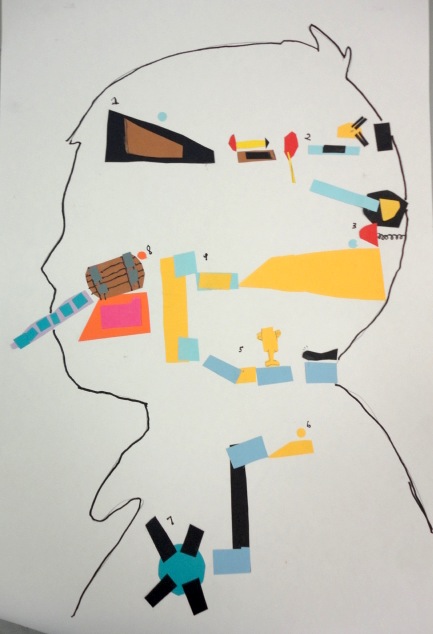
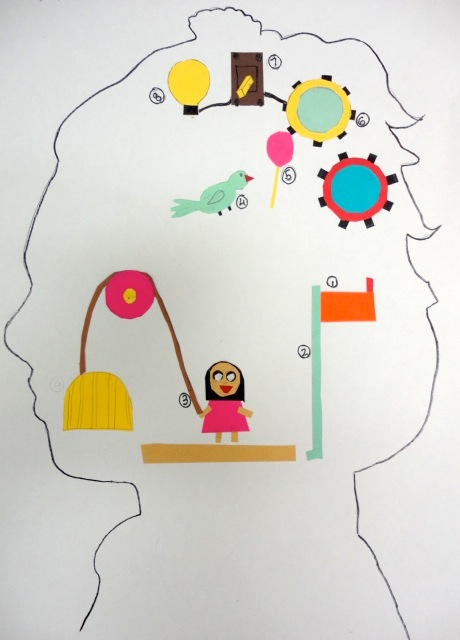
My students are tasked with coming up with Rube Goldberg style machine that controls something that happens in their head. Think of things like seeing, hearing, burping, etc. In addition to the Rube Goldberg inspiration, students also study the six simple machines and incorporate at least four of them into their work. 

The machines that students create are incredibly inventive. I laugh out loud at some of the hilarious sequential steps that they create. The final work is about 95% construction paper- a great way to use up old scraps. 


This is the artist statement that goes along with the artwork above it. 


Friday, July 25, 2014

3rd Grade Machine Brains

Do you know who Rube Goldberg is? If you do, you're cool in my book. If you don't, you will quite soon. This project was originally written by a colleague of mine, but I took it, added to it, and adapted it to my own curricular needs. It was originally written to fit in with the science curriculum (learning about simple machines) in third grade. That curriculum has since changed, but this project keeps on rockin' because it's too cool not to do. 

Rube Goldberg is now the main inspiration for this lesson. I still hit the simple machines pretty hard, but my students think Goldberg's cartoons are hilarious. His fantastically complicated machines are still a source of inspiration for competitions, Mythbusters, and YouTubers. They are all about cause and effect and make sneaky use of science and physics.
A classic example of a Rube Goldberg comic.
 Another source of inspiration for this project is a music video by the band OKGO that was created as a massive Rube Goldberg machine. The band is known for making incredibly creative music videos, including this super rad one that was released recently.


Finally, it comes down to making cool art. Each student spends a ton of time brainstorming and sketching for this project. I challenge them to design a machine that does something that happens in their heads. (Blinking, thinking, chewing, making boogers, etc.) They are required to have at least eight steps and at least four simple machines in their work. I use a projector (just shooting a white screen) to trace the students' silhouettes, then they use construction paper to make the rest of the project. I want at least 95% of the project to be made from the construction paper. I think the project turns out really cool and it really makes students think. I swear I saw some smoke coming out of a few kids' heads this year.  

Thursday, April 4, 2013

3rd Grade Machine Brains

 This is one of my favorite projects of the entire year for any grade level. It consists of massive integration of the science curriculum into the art room. I've always really enjoyed science, so maybe that's part of the reason why I enjoy this project so much. The point of it is to design a machine that has at least eight steps that does something that naturally occurs in a person's head. 

We always start this project by checking out a few of Rube Goldberg's hilarious machine cartoons. My students always get a big kick out of his work and it gets them thinking about the possibilities for their own projects. 

 Next, we talk about the six different simple machines and take a look at examples of each. Finally, we look at a few videos of Rube Goldberg style machines that people have actually built and put on YouTube. My favorite is a music video by OK GO. My students go nuts over this video.

 Finally, it's time to actually do some artwork. It takes a couple of weeks to brainstorm and get sketches finalized. It sounds like a lot of time, but it really does take that amount of time to do a couple drafts in order to ensure that the machines make sense. Final art is done on a 12"x18" white paper. I trace each student's silhouette during the sketching phase so it is ready to go when they begin their final. All of the machine parts are made with scrap construction paper. Huzzah for science and art!

Check out the full lesson plan here.

Click here for access to the presentation I use to begin this project.
(Download the presentation from Google Drive to use it. It will download as a Quicktime file that can be used on both Mac and PC. You will be able to navigate through using the arrow keys on the keyboard.) 

Monday, March 4, 2013

What are your favorite projects?

Everyone has favorite projects. Sometimes they are tried and true lessons that students love and look forward to working on each year. Others are fresh and new; maybe you have only taught them once or twice. I'm devoting this post to my favorite projects. I'm hoping that some of you will tell me about yours as well. 

My idea is for people who read this blog to post a link to their favorite lessons in the comment section for this post. The link could go to another blog, Pinterest post, or other outside site. I will then put the info, pictures, and maybe even lesson plans into this original blog post and fill it up with all kinds of awesome. Let's see how this goes. 

I'll start with a few of my own favorite projects. This first one is something that I did for the first time last year with my 5th graders. PLUSH MONSTERS!!

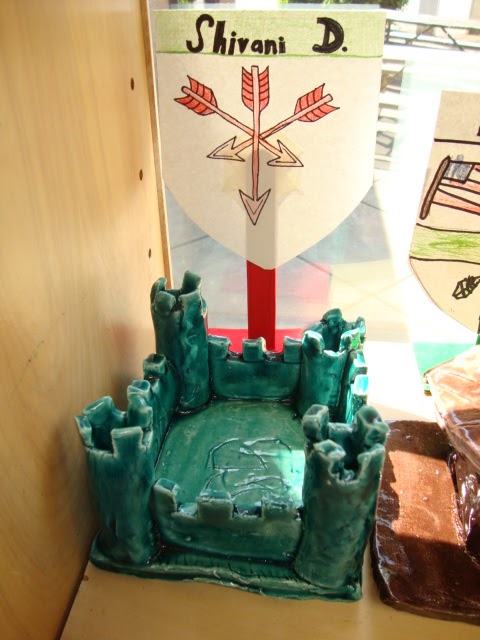
This project is one that I have been doing since student teaching. Clay Castles are incredibly popular at my school. I have students from first grade up asking when they get to make them. Of course kids always love to work with clay, so having an exciting lesson built around it is just a bonus. If I would ever stop doing this project, the villagers would probably revolt!

Finally, this is a project that I have adapted a little from a colleague in my district. It combines my love of science with sweet art skills to end up with a super cool project. It also ties in closely with third grade science curriculum. Your principal will love this lesson as well. It is all about using simple machines to create a Rube Goldberg style machine inside the head to complete a task that ordinarily happens in the head. Simple Machine Brains are great fun.

 Now it is time to comment with links to your favorite lessons. I can't wait to see all of the interesting and innovative projects that all of you are working on. 

Rina over at K-6 Art wins the prize for the first favorite lesson comment! Virtual high five! Her favorite project post is Oil Pastel and Baby Oil 'Paintings.' She is using a super cool technique using baby oil to allow the pastels to blend more like paint. Check out her blog for more information!

Amber from Schooling at Home Happenings uses blogs to find quality art projects for her students. She likes this project that is based on the work of Henri Rousseau. Amber really likes that the project reinforces information about climate zones, weather, and animals. The cool thing about this blog is that she has a wide range of ages working on the same project. It is really interesting to see how the project is adapted to different age groups. 

Thursday, February 9, 2012

Machine Brains by 3rd Grade

This is an example of the artist statement I have my students do after each project.
This one is unusually long due the fact that I have each student write an explanation
for how their machines work. It goes along with the image above it. 
This project is probably one of my favorites among everything I teach. Part of the third grade science curriculum involves the study of simple machines. I take that idea and make it way more rad than a science textbook.


I start by introducing Rube Goldberg with a Keynote presentation. I'll put a link to that presentation at the bottom by the lesson plan link. For those of you who may not be familiar with Rube Goldberg, he was a cartoonist who had also been trained as an engineer. He was famous for creating drawings of complicated machines that did really simple tasks. My students absolutely love looking at these machines. 


We then talk about the six different kinds of simple machines (inclined plane, wheel & axel, wedge, pulley, screw, lever) and look at examples of each. The best part of the presentation comes next when I show videos that people have posted on YouTube of Rube Goldberg style machines that they have made at home. The best example is a music video by OK GO. Check it out-->


Each student then designs a machine using at least four of the simple machines to replace their brain. The machine is supposed to do something that happens in their head (blinking, yawning, remembering, making boogers, etc.). I really emphasize using logic in their machines. We go through several sketches in order to make sure the machines make sense. The rest of the project is dedicated to the kids using construction paper scraps (it's a great way to use up scraps) to create their machine on final paper. My students love the project and it really gets them to use their brains (pun intended)!


See the lesson plan here! 

See the presentation here!
**I don't usually upload the presentations I do because the files are often pretty big. This file is a .mov file that can be downloaded from google docs and navigated with the arrow buttons on the computer. It includes the Goldberg images, simple machines, and three videos. If you look at it directly from google docs, the slides at the beginning go really fast. You need to download it in order to have control of the speed of the slides. If it doesn't work for some reason, let me know and I'll try to troubleshoot and come up with a solution that works.

Tuesday, February 15, 2011

3rd Grade Machine Brains


This is now the third time that I've done this project and it continues to be one of my favorites.  For this third grade project, I start out by showing the students the work of the cartoonist Rube Goldberg.  We discuss his hilariously complicated machines.  Next, we look at the six kinds of simple machines and check out examples of each.  Finally, I have been able to find all kinds of fantastic videos of chain reaction "machines" that people have built.  One that is particularly good is a music video for the song "This Too Shall Pass" by OK Go.  Definitely check it out if you have a chance.


The students must then design a machine that fits inside their head that will do something that their head actually does.  Kids have chosen everything from coming up with an idea or blinking to machines that make boogers.  I require that their machines have at least eight steps and include four of the six simple machines.  It takes a couple of weeks for the kids to refine their sketches, but the end products end up looking really cool.  I have the kids use construction paper scraps to make the machine parts.  After the artwork is finished, I have each student write about how their machine works on their artist statement.  


In the images above, I included full student examples as well as an excellent example of the artist statement.  That particular statement goes along with the first artwork example.  I also included a few close-ups of specific machine parts that I thought were extra cool.  Enjoy!